True, we might have gotten bored with the same old, same old. I mean profound developmental impairment both physical and cognitive, central fevers, cortical blindness and refractory epilepsy. They might not have kept us on our toes. So, it's understandable that we've now had retching and vomitting added to the mix.
It's been nearly two weeks since those new symptoms debuted. Last week's exam by the pediatrician didn't explain them so we did blood tests on Monday. We also consulted by email with the neurologist..
The pediatrician - who has kindly acquiesced to keeping C. on despite her nearly 23 years - thought that perhaps one of C.'s anti-epileptics is the culprit. The one added on last is Vimpat/Lacosamide. I recall that the neurologist who saved her from a near-coma during her last hospitalization said then that her Vimpat dosage was too high. But he ultimately left that unchanged because she recovered just by his removal of several other drugs that the hospital team had been administering her.
But the neurologist treating C. now - a member of the above hospital team - dismisses that theory.
The Hubby and E., the caregiver, are convinced that phlegm is to blame for the vomiting. But I'm not. She just shows no signs of phlegm, doesn't have a runny nose and isn't coughing. Besides, she's never vomited from a cold in the past.
We also emailed the gastro who had prescribed Carnitine to repair her liver when it was damaged by the Valproic Acid medication. She's been taking 250 mg. of it three times a day for over a year. Then this past weekend we went away for 24 hours with the entire family. I forgot to pack in the Carnitine and C. did not seize, vomit or retch the entire time.
So I hoped we'd found the cause. But now, after receiving the gastro's OK to stop carnitine, it's clear that was wishful thinking.
So the mystery of the vomiting remains.
C.'s Central Fevers have also increased in frequency and are stumping everybody as well. Her neurologists don't seem to have experience with them at all. In fact, while C. was last hospitalized one of the doctors posited that we have it all back to front: the seizures are inducing the fever.
Now, that's such a presposterous hypothesis, I can't decide where to begin debunking it. One, C. also has seizures without fever. Two, when she has a fever with seizures, they stop once the fever is lowered. Three, central fevers are a known phenomenon. I didn't invent them. But nobody on the team was listening.
I'm hoping that our neurologist will be able to track down a doctor who is familiar with central fevers. We plan to meet up with her for a face-to-face consult next week, something I'm not eager to do since the last time we spoke, in the hospital, I sensed she wasn't enamored with my ideas. (They tended toward pleading for lowering the meds, asap).
In the meantime, it's just stress, stress and more stress. Here's a self-portrait in the works that illustrates that.
Showing posts with label Valproic. Show all posts
Friday, March 2, 2018
Saturday, November 11, 2017
Stuck in status - Part 2
![]() |
| Doing the EEG |
Well, 20 hours later we are ensconced in the ER and, true to form, the medical team is swamped. In the last eight hours not much has been done for C.
Here's the sum total of intervention thus far:
- An EEG (see the photo). No surprises. The usual haywire scribbles.
- Two rounds of Valium IV (intravenous). Result: Longer intervals between seizures and an "out" C.
- Keppra IV - even though she received her morning dose before we got here. No clue as to reason. Didn't bother asking.
- First dose of Vimpat. The neurologist intended to start her on that but she later learned that the hospital's wards had none and that the hospital pharmacy was closed. She notified us she'd give something else instead of Vimpat when I remembered having purchased some a year ago. The neurologist had first given us a prescription for it - to replace Valproic Acid - but then nixed it at the last minute. She had discovered it poses a slight risk of liver damage. Not something we needed again. But I had already bought the stuff so I stashed it away in my old-drug closet.
She's had only one meal today. The rest of the day, due to her seizures or her Valium-induced sleep, eating wasn't feasible.
Wednesday, March 1, 2017
From liver toxicity to muscle spasticity
![]() |
| Artist: Edward Siebold (1829) |
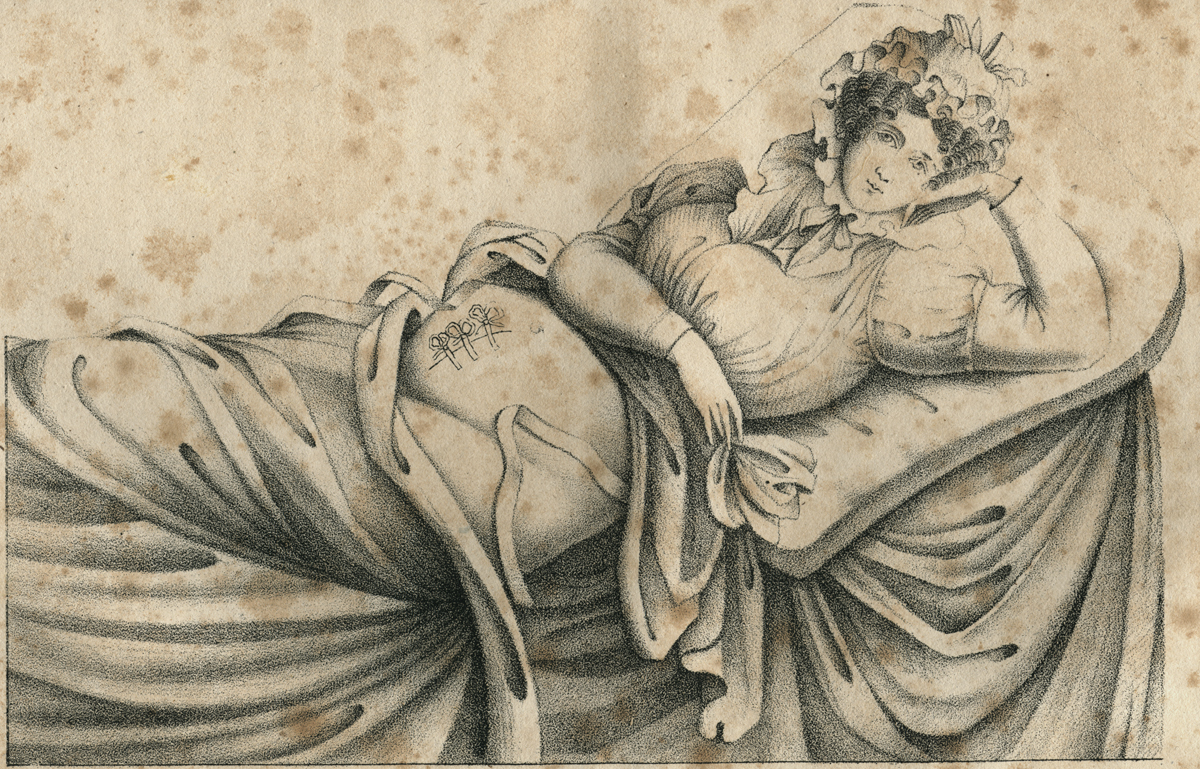
I finally had that gynecological procedure I've been mentioning on and off for one and half years. I'll leave it at that to avoid TMI.
The crux of it is I can't lift for a while, can't even turn C. over while she's in bed, have been awfully weak and have even had a low grade fever for the past few days. Today was the first day of semi normality, thank heavens.
So parents of children like C.: Beware! All that lifting and carrying isn't only dangerous for your back. Your pelvic organs could be victims too. Nobody ever shared that secret with me until surgery was my only option.
Our Australian darling of a caregiver has left us to resume the life of a recent university graduate in her late twenties with a boyfriend from these parts. We wish her much happiness but already miss her terribly.
Her replacement as a carer for C., a kind, experienced woman of 53, is stressing me out despite her good intentions. There seems to be a communication gap since English is her second language and we don't speak a word of her first. She also seems eager to take charge even when I'm around -- but is caring and sensitive towards C. so we'll just need to iron out the kinks.
Enough grumbling. We would never manage without her.
This week she and the Hubby brought C. to the gastro guy who specializes in liver diseases and who gave us some good news. "The first good news we've had about C. in twenty years" as the Hubby put it.
For starters, the gastro's report states that the "probable diagnosis" for her liver is Valproic Acid-Induced Liver Injury, although elsewhere he qualifies that by writing Valproic Acid is, in his view, the "DD (=Differential Diagnosis) with a fair suspicion of Autoimmune or Idiopathic".
So, a warning for any of you with kids on Valproic Acid: Be scrupulous about follow-ups and insist that the neurologist address any anomalies in blood test results. Also insist on tests for Ascites (there's an ultrasound to confirm and quantify that symptom) and any other fluid retention. Our neurologist had been dismissive of blood results that were red flags for our pediatrician. And she (the neurologist) never bothered to ask us about fluid retention, let alone examine C. for signs of it.
I would question one point that the gastro made in his report: "C. commenced a low salt diet and Aldectone 50 and Fusid 50 with excellent results". That's inaccurate in two ways:
- One, C. already was, and always has been, on a very-low-salt diet when her liver problems were first noticed.
- Second, the results of all that Aldectone and Fusid (both forms of diuretic) were not as he described them. Unless you call rendering C. gaunt, seriously dehydrated and requiring IV fluids in the ER "excellent results".
We did that, and she expressed surprise at the gastro's advice because this drug is known to pose liver risk. That, along with the info my daughter in law the clinical pharmacologist gave us, that Baclofen can exacerbate seizures - has left us in a quandary.
If any of you have ever given your children Baclofen, I'd appreciate hearing what results you saw.
Thursday, February 9, 2017
My daughter thinks she's a surfboard
![]() |
| Stiff as a surfboard: Trying to get C. into her wheelchair today |
We did fresh blood tests a week ago which showed that her liver has improved and her albumin level is within the normal range, though just barely. Also, without taking any diuretics, she is free of fluid retention anywhere in her body for the first time in years.
(Admittedly, that’s the layman’s take of the Hubby and me. The extremities are easy to assess; the abdomen, less so but we’re both pretty confident it’s all clear).
Another perk of that albumin rise is the dramatic progress in the healing of her pressure sores. I’m already allowing myself to dream of life without daily bandaging. (For those as ignorant of albumin’s significance as I was a few months ago, note: low albumin level means failure of sores to heal.)
The doctors, in particular the gastro, had been convinced that C.’s liver was seriously diseased, possibly with a chronic autoimmune illness. You’d expect them to now backtrack and blame the Valproic Acid for the liver mess – which was their original theory. But they haven't. They just concede that C. is a “complex case” and “a puzzle”. (The pediatrician did mention a viral infection as the possible culprit but didn’t elaborate.)
Presumably at our next visit to the gastro, we’ll hear some firmer hypothesis. For now, we’re just reveling in C.’s rehabilitated liver.
But, as I said, this is a mixed bag so there's been no partying to celebrate all the above. Because, despite those positive developments, C. hasn't been functioning very well. She has resumed feeding herself and we're really thrilled about that. But she has also become extremely stiff and won't bend her knees either to walk or to be seated. In the past, she has had a tendency to lock them periodically but she always loosened up eventually. These days, they are constantly rigid to the umpteenth degree. It takes two-three adults to seat her. And when I try to walk her, she just goosesteps.
Seizures have been more or less under control (around two a day) with a raised Cannabis dosage: 22 drops, 3 times a day. She’s also getting Keppra – 750 mg twice a day and Carnitine 500 mg, 3 times a day.
We continue to enjoy our daily help with caring for C. She’s a fantastic young Australian woman who just earned her BA in chemical engineering. She arrived without any experience in this field but is a quick learner, reliable and very compassionate towards C., which has enabled me to sleep more at night, dote on my grandchildren and, so far, keep that Takotsubo at bay.
Wednesday, January 18, 2017
C. delivers a few surprises
Heeding those cardiologists who treated my Takotsubo, we've finally, for the very first time,
hired somebody to help us care for C. Somehow, inexplicably, I now have less time to blog. So quite a lot has happened since my last update.
C. has amazed us all - including the doctors - with an unexpected turnaround. While on Prednisone to treat her malfunctioning liver, she took to screaming a lot so the gastro instructed us to wean her off it. Since she'd only been on it for ten days, we can't really attribute her improved liver to it. Nevertheless, for some reason, she is no longer suffering from Ascites, nor from fluid retention in her feet, legs, hands or face. It's uncanny.
There's a slim possibility that the L-Carnitine which the gastro prescribed two weeks ago deserves some credit for the change. It's a supplement that sometimes benefits the liver. But after two weeks? I wouldn't bet on it.
Presumably, this is why the gastro/liver specialist now believes that her liver has been repairing itself. Does this mean he has ditched his diagnosis of Chronic Autoimmune Hepatitis? Is he now convinced that the Valproic Acid - which we weaned C. off as soon as we learned that her liver was damaged - was the culprit after all? Perhaps. (If he does, then he and I are on the same page.)
We'll find out at our next appointment. Details like that don't really interest us know. We're just revelling in the new reality.
Along with the liver improvement, we've seen an equally surprising drop in seizure activity. That's happening with Keppra at 750 mg twice/day and Cannabis raised from 19 drops 3 times a day to 20 drops. We've finally been able to raise C.'s Cannabis dosage because the government just issued C. a new license with the increased dosage that her neurologist requested.
On the functioning front, C. has also astounded us. She has gradually resumed placing the spoon in her mouth to feed herself; today she performed that feat at her peak. She's also been standing and walking somewhat better than she has over the last two months - albeit while screaming quite a bit of the time. Protesting an activity she doesn't like is progress for C. So we're not complaining about that.
Of course, we aren't deluding ourselves. This isn't our first time down the road of miraculous improvement and we're well aware it can lead right back to deterioration and despair.
But for now, we're savoring the respite, the calm and the sweet taste of progress.
hired somebody to help us care for C. Somehow, inexplicably, I now have less time to blog. So quite a lot has happened since my last update.
C. has amazed us all - including the doctors - with an unexpected turnaround. While on Prednisone to treat her malfunctioning liver, she took to screaming a lot so the gastro instructed us to wean her off it. Since she'd only been on it for ten days, we can't really attribute her improved liver to it. Nevertheless, for some reason, she is no longer suffering from Ascites, nor from fluid retention in her feet, legs, hands or face. It's uncanny.
There's a slim possibility that the L-Carnitine which the gastro prescribed two weeks ago deserves some credit for the change. It's a supplement that sometimes benefits the liver. But after two weeks? I wouldn't bet on it.
Presumably, this is why the gastro/liver specialist now believes that her liver has been repairing itself. Does this mean he has ditched his diagnosis of Chronic Autoimmune Hepatitis? Is he now convinced that the Valproic Acid - which we weaned C. off as soon as we learned that her liver was damaged - was the culprit after all? Perhaps. (If he does, then he and I are on the same page.)
We'll find out at our next appointment. Details like that don't really interest us know. We're just revelling in the new reality.
Along with the liver improvement, we've seen an equally surprising drop in seizure activity. That's happening with Keppra at 750 mg twice/day and Cannabis raised from 19 drops 3 times a day to 20 drops. We've finally been able to raise C.'s Cannabis dosage because the government just issued C. a new license with the increased dosage that her neurologist requested.
On the functioning front, C. has also astounded us. She has gradually resumed placing the spoon in her mouth to feed herself; today she performed that feat at her peak. She's also been standing and walking somewhat better than she has over the last two months - albeit while screaming quite a bit of the time. Protesting an activity she doesn't like is progress for C. So we're not complaining about that.
Of course, we aren't deluding ourselves. This isn't our first time down the road of miraculous improvement and we're well aware it can lead right back to deterioration and despair.
But for now, we're savoring the respite, the calm and the sweet taste of progress.
Thursday, January 5, 2017
Our mammoth meds mess
We are deeply submerged in a morass of horrific seizures, new meds that aren't working and may be harming, deterioration in functioning and doctors whom we like and trust but who have no firm convictions, only wild guesses.
The silver lining is that at least they are humble enough to admit that to us.
My daughter C. has been suffering bouts of severe seizures on a daily basis now which we can only halt with some 13 drops of Cannabis THC. That in turn zombies her out, so there's no food or fluid for a while afterwards.
Keppra is the only anti-epileptic she is currently getting. It replaces the Valproic Acid she had been on for about two years. We had to wean her off the VA because doctors suspected it either caused or exacerbated the liver damage we discovered some six months ago. (The jury is still out on that point.)
The liver damage was uncovered when we tested C.'s blood albumin levels and found them to be much lower than normal. We had tested for albumin because the half dozen pressure sores scattered over her body hadn't been healing for several months.
C.'s damaged liver triggered Ascites in her abdomen and extremities, So after drainage in the hospital - and removal of 4 litres of abdominal fluid - she was placed on daily doses of two diuretics.
After a month of that regimen, C. had grown frighteningly gaunt. Her bones and veins protruded, her cheeks were sunken and she looked about ten years older. A parade of dietitians was consulted but none could figure out where all that wholesome and calorie rich food I was feeding C. was vanishing.
Blood tests finally showed high levels of saline, indicating extreme dehydration which was fingered and blamed for her gauntness. Here's how the dietitian explained it to me: Every cell in the body contains fluid. When there's dehydration, they all shrivel up just like a dried out plant.
So we had been shrinking C. with our very own hands. The liver expert ordered the diuretics halted immediately.
We had reluctantly started Vimpat for C.'s seizures since the Cannabis CBD alone wasn't doing the trick. But one day into that, she went into status epilepticus which even THC couldn't tackle. So it was off to the ER again.
There the neurologist ordered Keppra for the seizures (replacing the Vimpat) and the liver diseases guy chose Prednisone for the liver.
That brings us full-circle back to our current morass which we reported to both the gastro/liver doctor and the neurologist.
Their responses were the following changes:
For some reason we can't fathom, the gastro doctor has shelved the liver biopsy idea, leaving us in the dark about the source of C.'s liver issues. (In his email conveying this decision, the doctor factored in my recent Takotsubo event. Huh??)
Since the gastro doctor prescribed L-Carnitine, I've been reading a lot about it and see it's quite trendy. Have any of you seen impressive results from it in your children?
I stumbled across a sobering clip [on this page] after writing the above update and am reconsidering: We may actually be living on easy street.
The silver lining is that at least they are humble enough to admit that to us.
My daughter C. has been suffering bouts of severe seizures on a daily basis now which we can only halt with some 13 drops of Cannabis THC. That in turn zombies her out, so there's no food or fluid for a while afterwards.
Keppra is the only anti-epileptic she is currently getting. It replaces the Valproic Acid she had been on for about two years. We had to wean her off the VA because doctors suspected it either caused or exacerbated the liver damage we discovered some six months ago. (The jury is still out on that point.)
The liver damage was uncovered when we tested C.'s blood albumin levels and found them to be much lower than normal. We had tested for albumin because the half dozen pressure sores scattered over her body hadn't been healing for several months.
C.'s damaged liver triggered Ascites in her abdomen and extremities, So after drainage in the hospital - and removal of 4 litres of abdominal fluid - she was placed on daily doses of two diuretics.
After a month of that regimen, C. had grown frighteningly gaunt. Her bones and veins protruded, her cheeks were sunken and she looked about ten years older. A parade of dietitians was consulted but none could figure out where all that wholesome and calorie rich food I was feeding C. was vanishing.
Blood tests finally showed high levels of saline, indicating extreme dehydration which was fingered and blamed for her gauntness. Here's how the dietitian explained it to me: Every cell in the body contains fluid. When there's dehydration, they all shrivel up just like a dried out plant.
So we had been shrinking C. with our very own hands. The liver expert ordered the diuretics halted immediately.
We had reluctantly started Vimpat for C.'s seizures since the Cannabis CBD alone wasn't doing the trick. But one day into that, she went into status epilepticus which even THC couldn't tackle. So it was off to the ER again.
There the neurologist ordered Keppra for the seizures (replacing the Vimpat) and the liver diseases guy chose Prednisone for the liver.
That brings us full-circle back to our current morass which we reported to both the gastro/liver doctor and the neurologist.
Their responses were the following changes:
- Wean C. off the Prednisone and replace it with a different steroid
- Increase the Keppra dose from 500mg 2x/day to 750 mg 2x/day and then, perhaps, to 1,000mg.
![]() |
| To view the video |
Since the gastro doctor prescribed L-Carnitine, I've been reading a lot about it and see it's quite trendy. Have any of you seen impressive results from it in your children?
I stumbled across a sobering clip [on this page] after writing the above update and am reconsidering: We may actually be living on easy street.
Saturday, December 3, 2016
In real-time, a trying night
Caring for C. has become a consuming and stressful ordeal.
While I type, we are deliberating over whether to call an ambulance as her pediatrician advised, She's just been in status epilepticus for an hour and a half. For the moment, the seizures have petered out and she's asleep so we're holding off because I just hate being in hospital with her.
What precipitated this crisis is that she has been off the Valproic Acid for one week now. The only treatment she's been receiving is cannabis oil: CBD 3x/day and THC whenever she had a string of seizures which wasn't often.
But we had been instructed by her new neurologist to start her on Vimpat while weaning off the VA and I disobeyed those instructions. Why? I had this pipe dream of having her off any anti-epileptics for the first time in twenty years and perhaps glimpsing a modicum of cognitive recovery.
But I now regret my little "experiment". Our devoted and wise pediatrician sounded puzzled (even annoyed) tonight when I confessed that C. hasn't been on Vimpat all along.
And in the background of this crisis is the new liver diagnosis we received on Sunday when we visited her new gastro: Autoimmune Hepatitis. He is now 80% certain that it wasn't the Valproic Acid that damaged her liver - as he'd presumed earlier - but rather this disease which almost never afflicts anybody as young as C. Further tests - a fibroscan and a biopsy - will clinch the diagnosis.
To add salt to the wound: we have been giving C. diuretics to drain the fluid which has been accumulating due to her liver damage. The result is a shockingly gaunt child. Clearly, she had been harboring excess fluid everywhere, even her face, for quite some time.
Tuesday, November 22, 2016
Victims of Valproic Acid on France's radar
![]() |
| I'm down to giving only 200g of valproic acid to C. as we wean her entirely off |
It was an apt reaction to this Reuter's report I shared with him. They say that last Tuesday, November 11th, the French Parliament amended the 2017 budget bill to include 10 million Euros earmarked for a new compensation fund.
The beneficiaries will be the victims of none other than valproic acid!!
Yes, the very drug that C. has been imbibing for three and a half years and that has apparently wreaked havoc with her liver.
Last night, we started C. on two diuretics - Furosemide and Spironolactone - to replace weekly drainage in the hospital. And, of course, we're still hoping that once we have finished the valproic acid weaning, her liver will recover somewhat. (We're already down from 700 to 200 mg twice a day).
And still no word from that pediatric neurologist who prescribed the friggin' stuff and ignored the signs that her liver was being damaged by it. Right up to the very end of her relationship with us!
Wednesday, November 16, 2016
Now disabled *and* chronically ill (Part 3)
![]() |
| C.'s elbow and the latest sore |
We've been home for four days now, all without the Hubby who is overseas. We were reassured that nothing untoward in the next week was anticipated by any of the doctors. But here we are, already seeing several worrisome manifestations.
The ascites seems to have returned. Her stomach seems swollen and hard, though less so than it did before her hospitalization.
Also, her hands are plagued with blisters that, after bursting, remain open sores for a long time.
Finally, there's a large new sore on her elbow accompanied by swelling and redness that had me deliberating over an ER visit.
Fortunately, my older daughters were around with counsel and support and we all decided against the ER. Fortunately it was the right call - after a night with the iodine-and-bandage treatment, the area surrounding the wound had subsided.
But we're not out of the woods and the visiting nurse was duly impressed with C.'s elbow when he saw it this morning - and he usually downplays C.'s pressure sores.
These days, I vacillate between acceptance of the gastro's dire prognosis and hope that our optimistic pediatrician knows better: "She'll probably be fine after she's weaned off the VA" he assured us.
We are now down from 700mg/day to 400mg/day of Valproic Acid. I haven't managed to get the Vimpat script yet so we're in risky territory. But I may hold off with it even after I've purchased it. I am dreaming of having C. on cannabis alone and enjoying some pleasant surprises.
Of course that would mean resisting the doctors pushing that Vimpat and I'm not sure I'm up to the challenge.
Just to offset some of this doom and gloom, here's a clip that is bound to send your spirits soaring. .
Friday, November 4, 2016
The liver plot thickens
The good news about C. is scarce these days.
She has still been signing "I want to eat" impressively (by putting her finger in her mouth) and putting the spoon in her mouth until her bowl is empty. But on every other score, she's not doing well. She does her daily MEDEK assisted walking with me - but not nearly as proficiently as she once did.
But most alarming are the awful blood test results which were unchanged today. And along with those, yesterday's ultrasound findings, the outstanding of which were abnormality of texture of the liver and mild to moderate ascites which the pediatrician referred to in his summary as "liver disease".
I can't recall whether I blogged about this but I did notice that C.'s stomach was enlarged and hard about two months ago. Inexplicably, and unforgivably, I brushed it off as insignificant or perhaps weight gain from the dietary changes I'd made on the dietician's recommendation.
There was so much else to tend to that shlepping C. to the pediatrician to have him examine her stomach didn't seem essential. After all, we were sending him photos of her pressure sores which were topping our list of headaches back then. And he didn't urge us to bring her in.
Besides, when we brought her to the wound clinic, she was examined and her fluid retention was declared "to be expected" and "to be ignored". The doctor doing the declaring was an orthopedist and we'd been scheduled to have the vascular specialist examine her. But when I expressed doubt, the clinic nurse explained that he was "unavailable". She assured us that this orthopedist was equally competent since all the doctors in the clinic were "one team".
The icing on this catastrophe cake is that after reading the ultrasound summary which we took the initiative of forwarding to C.'s neurologist, she promptly wrote back: "This is beyond the scope of my expertise. You need to talk to your family physician ASAP".
And then came the cherry on the icing: when we asked her whether she had submitted the request to the relevant government licensing office to raise C.'s cannabis dosage which she'd promised to do, she wrote back: "I would stop the cannabis now. There is a problem with her liver and no one knows if this is the cause."
Of course, it's more likely to be related to the valproic acid (which by the way she prescribed). But she isn't buying that theory.
Now I'm afraid she'll request that our license be rescinded.
She has still been signing "I want to eat" impressively (by putting her finger in her mouth) and putting the spoon in her mouth until her bowl is empty. But on every other score, she's not doing well. She does her daily MEDEK assisted walking with me - but not nearly as proficiently as she once did.
But most alarming are the awful blood test results which were unchanged today. And along with those, yesterday's ultrasound findings, the outstanding of which were abnormality of texture of the liver and mild to moderate ascites which the pediatrician referred to in his summary as "liver disease".
I can't recall whether I blogged about this but I did notice that C.'s stomach was enlarged and hard about two months ago. Inexplicably, and unforgivably, I brushed it off as insignificant or perhaps weight gain from the dietary changes I'd made on the dietician's recommendation.
There was so much else to tend to that shlepping C. to the pediatrician to have him examine her stomach didn't seem essential. After all, we were sending him photos of her pressure sores which were topping our list of headaches back then. And he didn't urge us to bring her in.
Besides, when we brought her to the wound clinic, she was examined and her fluid retention was declared "to be expected" and "to be ignored". The doctor doing the declaring was an orthopedist and we'd been scheduled to have the vascular specialist examine her. But when I expressed doubt, the clinic nurse explained that he was "unavailable". She assured us that this orthopedist was equally competent since all the doctors in the clinic were "one team".
The icing on this catastrophe cake is that after reading the ultrasound summary which we took the initiative of forwarding to C.'s neurologist, she promptly wrote back: "This is beyond the scope of my expertise. You need to talk to your family physician ASAP".
And then came the cherry on the icing: when we asked her whether she had submitted the request to the relevant government licensing office to raise C.'s cannabis dosage which she'd promised to do, she wrote back: "I would stop the cannabis now. There is a problem with her liver and no one knows if this is the cause."
Of course, it's more likely to be related to the valproic acid (which by the way she prescribed). But she isn't buying that theory.
Now I'm afraid she'll request that our license be rescinded.
Monday, October 31, 2016
Liver worries liven things up
![]() |
| Source: http://www.hepatitiscnewdrugresearch.com/liver-health.html |
Our pediatrician - despite C.'s reaching 21 years I implored him to keep her on - has done another 180. But before convicting him of vacillation, bear in mind that he's a Harvard Med School graduate, an ace diagnostician, and a humble, compassionate human being.
So to recap: he initially blamed C.'s low protein and albumin on the valproic acid of which she gets 1400 mg/day. He then switched to blaming her diet and recommended as a remedy more eggs and dairy. Then last week he switched back to the valproic acid theory. He said his research revealed that every one of C.'s blood abnormalities - and she's had several for quite some time* - could be traced to valproic acid.
He couldn't fathom why C.'s neurologist doesn't agree and guesses it might be because this condition is rare. To confirm his suspicion, he has referred us to a hematologist and an ultrasound of her upper abdomen including liver, gall bladder, bile ducts, porta hepatis, portal vein and spleen.
He's even referring to this possible condition with a very medical name: mild hepatic dysfunction.
Here's the Medscape entry on Drug-Induced Hepatotoxicity:
Updated: Oct 09, 2014
BackgroundSo while I'm still awaiting the ultrasound scheduled for this Wednesday and an appointment with the hematologist, I feel that we're inching toward a final resolution of this mess.
Drugs are an important cause of liver injury. More than 900 drugs, toxins, and herbs have been reported to cause liver injury, and drugs account for 20-40% of all instances of fulminant hepatic failure. Approximately 75% of the idiosyncratic drug reactions result in liver transplantation or death. Drug-induced hepatic injury is the most common reason cited for withdrawal of an approved drug. Physicians must be vigilant in identifying drug-related liver injury because early detection can decrease the severity of hepatotoxicity if the drug is discontinued. The manifestations of drug-induced hepatotoxicity are highly variable, ranging from asymptomatic elevation of liver enzymes to fulminant hepatic failure. Knowledge of the commonly implicated agents and a high index of suspicion are essential in diagnosis.
And, who knows, a reversal of this condition may also herald an improvement in C.'s general functioning. (that old optimism rearing its delusional head again).
As for the pressure sores, they are healing nicely now though they're still around and requiring that time-consuming daily bandaging.
Still haven't organized any at home physiotherapy or occupational therapy or hydrotherapy in C.'s former school's pool. We've begun to collate the names of a few senior, respected ones to contact.
___
* Abnormally low total protein and Albumin
Abnormally low hemaglobin, Red Blood Cells and Hematocrit
Abnormally high MCV [Mean Corpuscular Volume] ) and MCH [Mean Corpuscular Hemoglobin] Levels are tested as part of a complete blood count test. The MCV test measures the size of the average red blood cell. The MCH test measures the amount of hemoglobin in the average red blood cell.
Thursday, October 13, 2016
Where have all the proteins gone, long time passing?
![]() |
| Me walking C in her new shoes |
I consulted our pediatrician who initially suspected that the valproic acid was to blame since liver malfunction is a known risk of that drug and since the liver plays the major role in producing proteins, including albumin.
He promised to get back to me with a more definitive answer but seemed to forget. When I called him today, he surprised me with a 180. He's now convinced that C.'s blood results are not low enough to indicate signs of liver failure, that the valproic acid is not involved and that the low protein levels must have a dietary cause.
But he dissed the dietitian - politely, of course. (Yes, I'm now back to my old disdain for dietitians.) He thinks the heaps of chicken and turkey which I've been giving C. are at fault. They're not the ideal protein sources. The best ones, he said, are milk products and egg whites.
Needless to say, I'll be incorporating those foods into C.'s diet immediately and will repeat the blood tests in a few weeks.
Aside from the plague of pressure sores, C. seems weakened by this mess as well. Even her assisted walking involves more of a struggle for her. Ah, for the old status quo.
C.'s neurologist, whom we emailed last night, agrees that the valproic acid is not a likely culprit.
So here's hoping the milk and egg solve the protein puzzle.. .
C.'s post-school existence: We haven't organized any at-home therapies yet. So I'm still caregiver, nurse, physiotherapist and OT. The hubby does the heavy lifting whenever he's here. Those forbidding 24 steps outside our front door haven't budged yet either. So C. only gets fresh air on the balcony these days. I know, it's nothing to write home about. Hoping for better news soon.
C.'s feet, like the rest of her body, don't grow at a normal rate so she doesn't outgrow her shoes. And with only one hour of use a day it takes years for her to wear them out. We finally reached the point where I could justify buying her a new pair - one size up to accommodate her edema.
Friday, March 4, 2016
Solving puzzles in the dark
![]() |
| C., knocked out from the latest round of seizures today |
For some reason, the blood test results yesterday were perfectly normal (105 k/UL), only one day after being horrific (57 k/UL).
But the liver profiles were bad and the pediatrician was convinced that the neurologist would replace the Valproic Acid post-haste with some other anti-epileptic.
But our neurologist emailed us to make an appointment to see her (that will be light years away) and in the meantime to leave everything as is. Whew. That was a relief. The last thing I want now is to dabble with some new potent drug and its inevitable side effects.
C. has been having at least one series of intense seizures every day lasting up to 10 minutes each. Could it be still the Propranolol which we haven't given her for three days? Or does it mean that the Propranolol is definitely not the culprit and that we should consider experimenting with it again?
One thing is certain: nobody can answer these questions definitively. And so we continue our groping in the dark.
Thursday, March 3, 2016
Farewell, Propranolol. Hello, low platelets
Yesterday, I mentally composed today's post right down to the title: "Seeking Your Input". In it, I told how the Hubby and I have always been on the same page where C. is concerned. And that's no triviality given that we tend to disagree on plenty of issues.
But, I was going to add, we now disagree on whether to continue with our Propranolol experiment. The Hubby, I mentally wrote, is convinced that C. has been more alert and focused since we began it, while I maintained that whatever improvement he's seeing is neither dramatic nor a breakthrough since she's periodically enjoyed similar states while on the cannabis.
The Hubby pointed out that even C.'s hydrotherapist noticed an improvement in her performance - independent and vigorous kicking with one of her legs.
My mental post concluded with a question for you readers: Should we continue the experiment given the possible adverse side effects of this drug? Readers, please weigh in.
But that post never made it to the keyboard.
It was rendered utterly irrelevant when the school nurse called yesterday to tell me that minutes after leaving the pool, C. had begun seizing repeatedly and intensively. She continued non-stop for over 15 minutes. The nurse said she said she'd never seen C. seize like that and it certainly sounded different to me than her usual fever-related attacks.
In the hope that it was nevertheless fever-induced, I raced over there with a bit of food so she could have Advil. Afterwards I took her temperature which, sadly, proved to be normal.
The truth is that on the second day and third days of Propranolol, C. had two episodes of several intense seizures, though not as severe as this one.
I sort of stashed them away in the rear corners of my consciousness. Now they seemed liked pieces in the puzzle.
C. returned to herself within about fifteen minutes of the end of the attack so I left her in school until the end of the day.
Anyway, the Hubby and I are back on the same page: we've agreed to stop the Propranolol for now, even though it's unclear whether it triggered the worrisome seizures.
And then for the icing on the cake, the routine blood tests C. had done yesterday produced awful results. She had an incredibly low platelet count - so low that the lab repeated the test: 57k/UL.and somewhat elevated MCV, 105 FL and Hemaglobin, 15.60G/DL.
Several of the tests couldn't be executed because, as the lab put it "there wasn't enough material". Neither the pediatrician nor the nurse know what that means. But everyone suspects it could be the code for "oops, we lost some of your daughter's blood".
The lab actually called our pediatrician last night to alert him which they only do when results are majorly alarming.
We've had the tests repeated today and are hoping that the results will be better. The pediatrician suspects that the Valproic Acid could be the culprit.
Just to add to the confusion, C.'s teacher just told me today that, on Monday, she noticed an improvement in her alertness and interaction. So another point for Propranolol.
Here's a confession but keep it to yourself: I'm actually, perversely, half-hoping that C. has a second whopping seizure attack without Propranolol. Then we could eliminate that drug as the trigger and safely resume the experiment.
But, I was going to add, we now disagree on whether to continue with our Propranolol experiment. The Hubby, I mentally wrote, is convinced that C. has been more alert and focused since we began it, while I maintained that whatever improvement he's seeing is neither dramatic nor a breakthrough since she's periodically enjoyed similar states while on the cannabis.
The Hubby pointed out that even C.'s hydrotherapist noticed an improvement in her performance - independent and vigorous kicking with one of her legs.
My mental post concluded with a question for you readers: Should we continue the experiment given the possible adverse side effects of this drug? Readers, please weigh in.
But that post never made it to the keyboard.
It was rendered utterly irrelevant when the school nurse called yesterday to tell me that minutes after leaving the pool, C. had begun seizing repeatedly and intensively. She continued non-stop for over 15 minutes. The nurse said she said she'd never seen C. seize like that and it certainly sounded different to me than her usual fever-related attacks.
In the hope that it was nevertheless fever-induced, I raced over there with a bit of food so she could have Advil. Afterwards I took her temperature which, sadly, proved to be normal.
The truth is that on the second day and third days of Propranolol, C. had two episodes of several intense seizures, though not as severe as this one.
I sort of stashed them away in the rear corners of my consciousness. Now they seemed liked pieces in the puzzle.
C. returned to herself within about fifteen minutes of the end of the attack so I left her in school until the end of the day.
Anyway, the Hubby and I are back on the same page: we've agreed to stop the Propranolol for now, even though it's unclear whether it triggered the worrisome seizures.
And then for the icing on the cake, the routine blood tests C. had done yesterday produced awful results. She had an incredibly low platelet count - so low that the lab repeated the test: 57k/UL.and somewhat elevated MCV, 105 FL and Hemaglobin, 15.60G/DL.
Several of the tests couldn't be executed because, as the lab put it "there wasn't enough material". Neither the pediatrician nor the nurse know what that means. But everyone suspects it could be the code for "oops, we lost some of your daughter's blood".
The lab actually called our pediatrician last night to alert him which they only do when results are majorly alarming.
We've had the tests repeated today and are hoping that the results will be better. The pediatrician suspects that the Valproic Acid could be the culprit.
Just to add to the confusion, C.'s teacher just told me today that, on Monday, she noticed an improvement in her alertness and interaction. So another point for Propranolol.
Here's a confession but keep it to yourself: I'm actually, perversely, half-hoping that C. has a second whopping seizure attack without Propranolol. Then we could eliminate that drug as the trigger and safely resume the experiment.
Wednesday, May 22, 2013
Waiting, Chapter II
![]() |
| Scene from the video, 'Calendar Conversations', mentioned below |
Nevertheless, this mother is at once witty, entertaining, informative and when warranted, scathingly critical and definitely worth following.
On Monday, the hubby and I were treated to another, long awaited lecture from the expert duo that first visited C.'s school two months ago. (I blogged about it under the title "Waiting". Now you understand the meaning of this post's title.) Once again they were edifying, insightful and inspirational. Once again the lecture was accompanied by demo videos. And, sadly, once again, the rest of the audience - the school's team of therapists - were resistant, belly-aching that the new ideas weren't realistic for our school's low staff/student ratio.
Finally, once again, I kid you not, they chatted and texted during the presentation.
Unlike the earlier lectures, these were open to parents so we weren't "crashers" this time. Invitations had been sent home to parents in our children's school bags weeks in advance. Notwithstanding, a grand total of 3 parents (including the two of us) attended. There are over 80 children in the school, plus about thirty more adults in the dormitory. (The paltry showing speaks volumes about this State's attitude towards parents of the disabled. But that's another blog entry)
Here are two low-tech but appealing ideas that the visiting duo suggested:
- Most of the lecture was devoted to this: the Calendar System. A means of preparing a child for upcoming activities via any symbols that "speak" to him. Individualized is the key word here. Probably no two calendars will be alike. You can learn more about this here and here (video: "Calendar Conversation").
- We learned another tip at a quiet one-on-one chat we had with the visitors after the lecture. "All" the parents were invited which meant we had the experts to ourselves. (The one other mother left after the lecture.) It was a truly enriching half hour.
You rest your child's hand in your palm and toss it up several times. Then stop. Wait for your child to respond by initiating the toss. I first tried it today and, as anticipated, C. did not respond. But it's so very easy and accessible that I'm hoping to inundate her with this exercise. Hopefully, we'll see some action eventually. I'll keep you posted.
A variation on this theme that the duo recommended is to sit your child on your lap and rock together a few times. Then stop and wait for your child to initiate the rocking. It doesn't get much simpler than that.
What prompted the expert duo to share those tips with us was my mention of something I learned from a teacher I bumped into on the street last week. She taught C. for several years until she committed the heinous crime of turning 70 and was put to pasture.
The fact that she was more energetic, dedicated, talented and youthful than the teachers half her age - and that she wanted to continue teaching - did not move the powers-that-be. No teacher after her has managed to connect with C. in any way.
But I digress. This teacher told me that the staff had been instructed by an expert in sexuality and the disabled not to touch the students. Ever. Not just to refrain from kissing or hugging but from any physical contact in order to avoid sexual misconduct. I have also noticed that at school nobody ever caresses or hugs C.
When I mentioned this to the American duo they moaned. They then proceeded to tell us how crucial touch is to teaching the most profoundly disabled.
There's got to be a better solution to the issue of sexual molestation.
Drug update:
C. has been on a therapeutic dose of Valproic Acid for 2 weeks and yes! - there are fewer seizures/day. On some, it seems there are only 3 to 4, instead of 4 to 7.
Subscribe to:
Posts (Atom)